Nuffnang

Wednesday, April 28, 2010

Edible Balcony - Mr Bee Pays A Visit

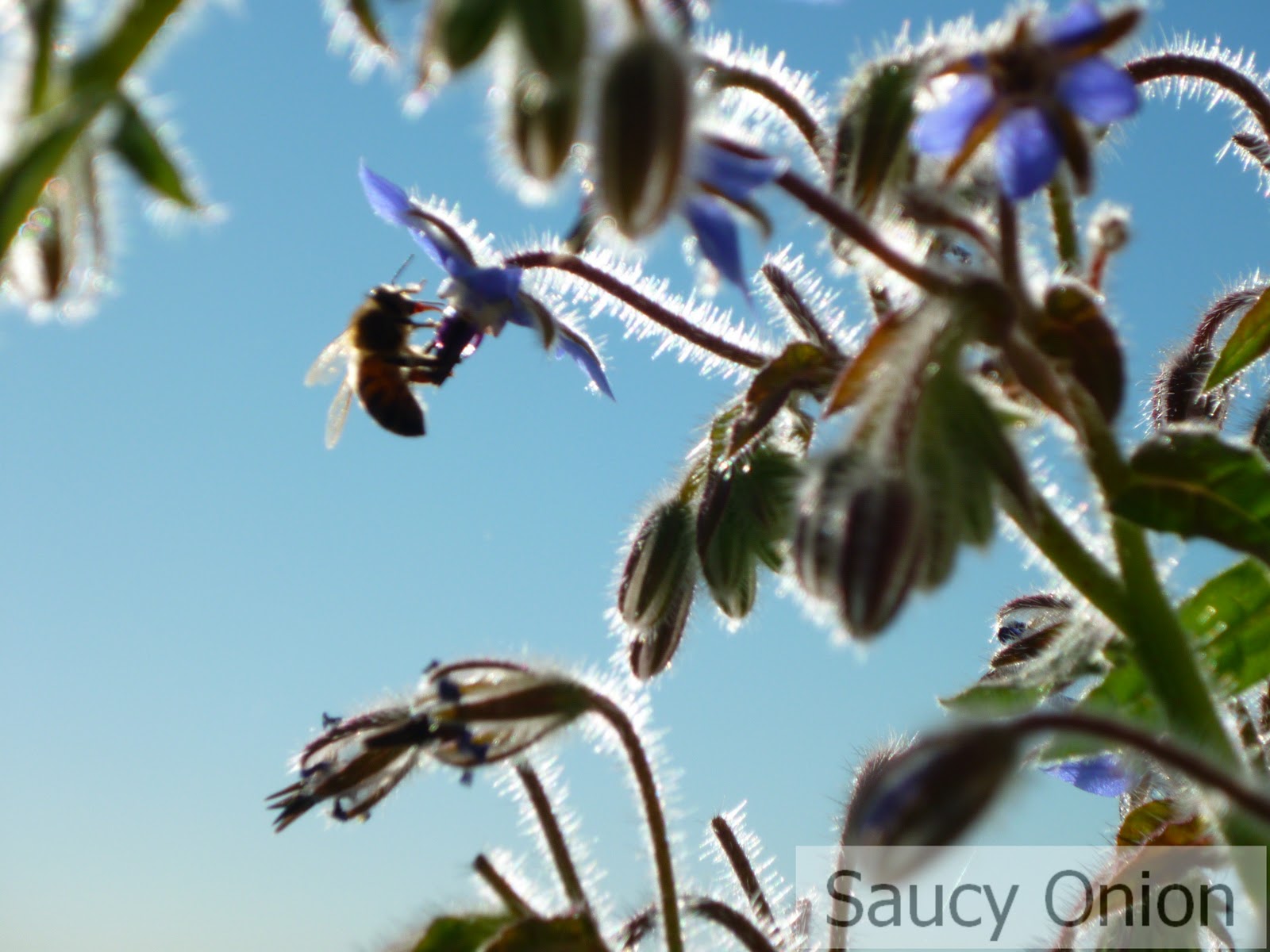
Well, as I mentioned in my last post the borage has been a delicious addition to the edible balcony. But it's also been a wonderful attractant for bees which, believe me, is hard to do when your plants are 300 metres up in the air!

I planted them in hanging baskets from seed in late January so they've taken about 3 months to flower. The plants are deep rooted and robust and are prolific flowerers.

..... and  they're irrestible to bees.... (coming in from the left)

drink up and enjoy!

Tuesday, April 27, 2010

Recipe: Pavlova with Edible Flowers

The Anzac Day long weekend always marks the end of those last lingering warm days. And this year in Sydney we've been blessed with unseasonally warm weather. But by the time my birthday comes around in mid May it will truly be winter and I'll be rugged up and wearing my boots!

The edibles have been luxuriating in this little burst of late summer. The peas are shooting up their stakes, the broccoli is throwing out wide rubbery leaves, the last of my peppers are turning a deep burnished red and the carrots, radishes and spring onions are racing each other to the finish line.

My borage plants are in full bloom and looked extraordinary against the pastel sunrise yesterday.

I'm growing them to attract bees and pollinating insects and because they're apparently good companion plants for strawberries AND of course because they are edible.

Their beautiful lilac flowers can be candied and used in desserts, or frozen in ice cubes to dress up a cocktail. The petals are incredibly sweet. Borage stems are used to flavour Pimms No 1. The leaves when young have a flavour similiar to cucumber and can be used in salads. Older leaves should be cooked and can be used similarly to spinach. There are a few spikey hairs on the stems but these dissolve in cooking.
The Spanish apparently blanch the stems, then batter and deep fry them as a tapas dish. Over the next few weeks I'm going to try them this way.

But first up something simple.

It was daring of me after watching the MasterChef 'Pavlova Challenge' last week, but I thought the borage flowers would look so pretty on a crispy, chewy, marshmallowy pavlova with thick cream on top. I was right.


Recipe: Pavlova (Stephanie Alexander's Cook's Companion)
Follow this recipe to the 'T' and you'll get a better pav than Donna Hay's!!!

Ingredients:
8 egg whites at rooom temperature
Pinch of salt
500g caster sugar
4 teaspoons cornflour
1 teaspoon white wine vinegar
few drops of vanilla
600ml thickened cream firmly whipped
Decorate with edible flowers or fruit

Method:
Pre-heat the oven to 180C degrees. Line two trays with baking paper. Draw two circles the size of your serving platter.
Beat egg whites and salt until soft satiny peaks form. Beat in the sugar a little at a time until all the sugar granules have been incorporated and the texture is smooth.
Mix in the cornflour, vinegar and vanilla. Heap mixture into even mounds within the outline of your circles. Flatten top and smooth edges.
Place in the oven and immediately reduce heat to 150C degrees and cook for 1 1/4 hours. Turn the oven off and leave meringues in the oven preferably overnight to cool and dry out completely.
Invert first disc onto a stand, fill with cream, top with next disc and more cream and decorate with edible flowers or fruit or both.

borage flowers: pretty and delicious

Fearing a MasterChef 'pancake' pav I was very relieved with the result!

Tuesday, April 20, 2010

Edible Balcony on Polyvore

If you haven't yet been bitten by the Polyvore addiction, let me be the first to introduce you.
Polyvore is an on-line shopping website where you get to create your fantasy designer outfit, home interior or garden. And after you've put your ensemble together you can buy it all online!
Be warned. You will lose hours of your precious time here.

I cut and pasted this gardening set this morning while my tea overbrewed and my toast went cold!

Wednesday, April 14, 2010

Edible Balcony - Take a peak at my peas

Peas were the first thing I remember growing as a child. They seemed to sprout without much trouble and had few pest problems.

I ordered this variety online from Diggers because it was an heirloom variety and the pods can be eaten as well as the peas.

I planted them in a 20cm metre deep container and used some leftover stakes to make a climbing tepee.

That was three weeks ago....

2 weeks ago they sprung into life...

..and with this Indian Summer we've been having they are squirming up the stakes.

They look like lovely green butterflies.

                                                      ...... inspiring another watercolour

Thursday, April 8, 2010

Recipe: Gundooee Wagyu Beef Mussaman Curry


Of course we came back with some wagyu beef from Gundooee - some Flinstone-sized steaks ( that went into the freezer) and about 1 kg of shin meat. Shin is a perfect cut for slow-cooking so I wanted to use it in a Thai Mussaman curry. This recipe is from the Arun Thai Restaurant cookbook 'Lemongrass and Basil'.

This free rage wagyu has beautiful marbling. The muscles worked hard so they are going to hold a lot of flavour.

The main ingredients are pretty simple but for your curry to have a fresh authentic pungency you should make your own mussaman curry paste. I know the list of ingredients can look daunting. Believe me, it's worth going the extra mile.

Throw all the ingredients into a small blender after they've been dry roasted..

...and you have plenty for your curry and enough paste for another two dishes. The paste can be stored in the fridge for up to three months.


Recipe: Mussaman Beef Curry with Gundooee Wagyu

Ingredients:
1 1/2 litres coconut milk
100g mussaman curry paste
1 kg beef topside, shank or shin cut into 2.5 cm pieces
Handful of dried bay leaves (or 5-6 fresh bay leaves)
12 small new potatoes
8 pickling onions, peeled
5 1/2 tablespoons fish sauce
3 tablespoons palm sugar
7 tablespoons Tamarind juice
Fried onions, coriander leaves and slices of chilli

Mussaman curry paste

Ingredients:
1 teaspoon coriander seeds
2 cardamom pods
1 teaspooon black peppercorns
1 teaspoon cumin seeds
1 nutmeg
2 cloves
6 big dried chillies, deseeded and soaked in water
4 cloves of garlic
6 slices of galangal
1 stalk of lemongrass
1 teaspoon of shrimp paste
2 teaspoons of vegetable oil
1 teaspoon salt

Method:
Heat your wok or pan over a low heat and add the coriander seeds, cardamom, black pepper, cumin, nutmeg and cloves and dry stir-fry until fragrant about 4-5 minutes. Remove and set aside to cool. Using the same wok, sitr fry all the remaining ingredients (except the shrimp paste, oil and salt)
Put all the spices in a mortar and pestle or a blender and blend to a fine paste. Add remaining ingredients and blend. Store in a jar in the fridge.

Heat 200 ml of coconut milk in a large saucepan and add the mussaman paste, stirring together until the oil from the paste separates and rises to the surface.

Add the beef stirring well to combine with coconut milk mixture then add the bay leaves and the remaining coconut milk and simmer for three hours until the beef if tender. ( This is when I went off to do the laundry and water the plants! I only needed 2 1/2 hours cooking time)
Add the potatoes and onions and simmer for a further hour until the potatoes are cooked. Season the curry with fish sauce, palm sugar and tamarind juice. Garnish with fried onions, coriander leaves and slices of chilli and serve with some jasmine rice.

I'm sure the wagyu beef made this curry soar to new delicious heights. It's very mild - despite the chillis - and had a sweet, sour, salty, hot balance that Thai curries are famous for. The meat literally melted, the sauce was rich and thick and the potatoes were soft and mushy.Yummmmmm...
Thanks Rob and Nita!

I don't know whether it was being surrounded by all that glorious bush for the weekend but I came back to Potts Point creatively inspired and knocked up this watercolour yesterday morning. Doesn't quite do my view justice but you get the general drift.....